Every day, confidential documents sit unattended on printer output trays. Payroll records. Personnel files. Medical information. Financial reports. Client records. Most businesses don’t realize how much sensitive information is left sitting in plain sight, waiting for whoever happens to walk by first.
Print security tends to get overlooked. Most conversations about protecting company data focus on computers, email, and servers. Printers, meanwhile, sit in a shared hallway or copy room, quietly producing documents that anyone nearby can pick up, whether they were meant to or not.
What Secure Print Actually Does
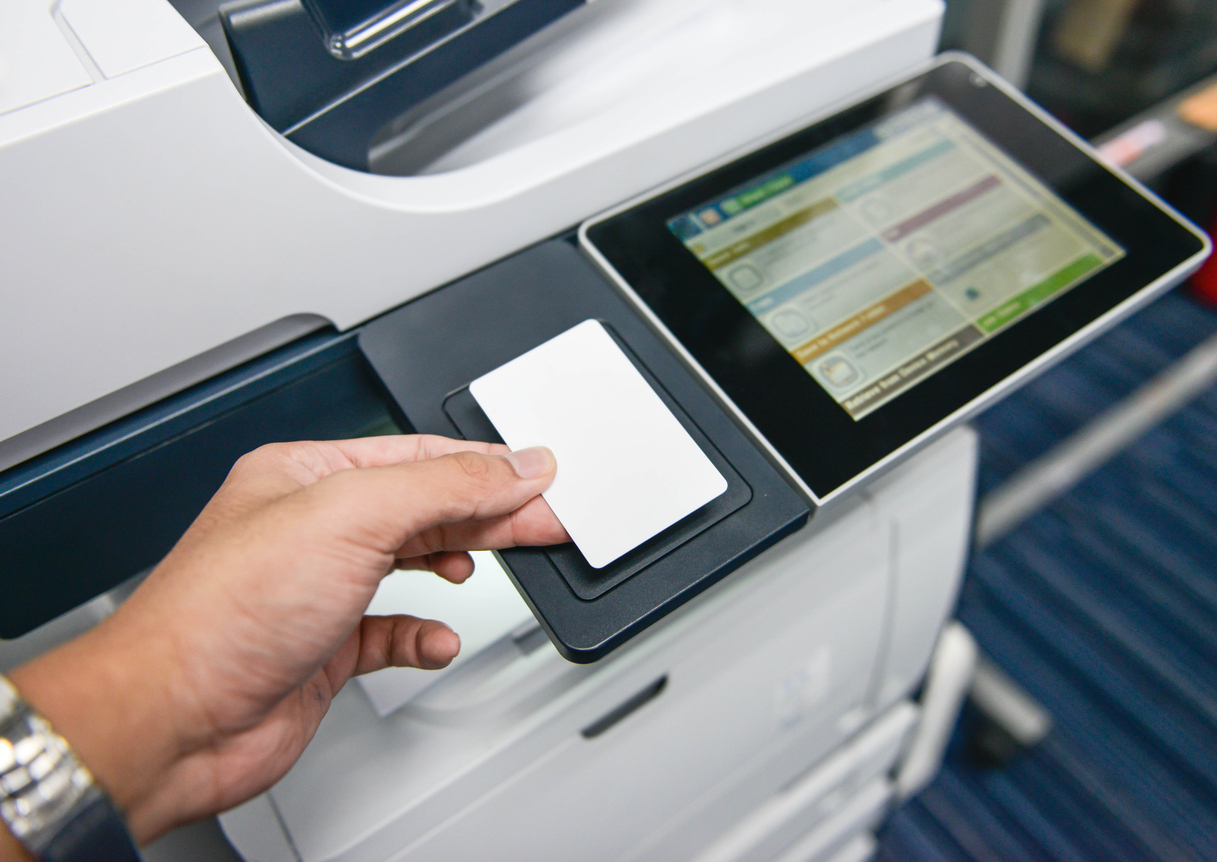
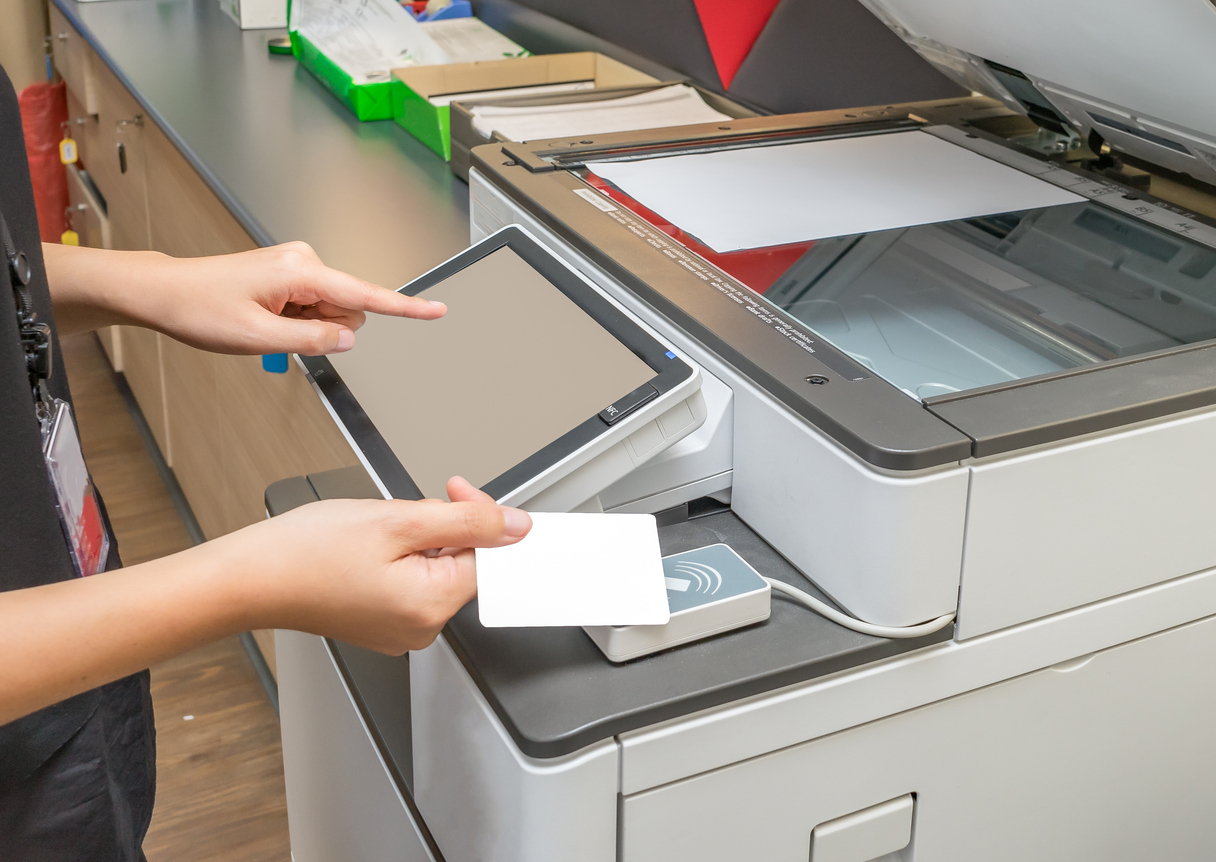
Secure Print, sometimes called pull printing or secure release printing, changes how a print job reaches paper. Instead of a document printing the moment it’s sent, the job is held in a queue until the person who sent it authenticates at the device, whether that’s a badge tap, a PIN code, or a login. Only then does the document print. Only the person standing at the machine ever sees it.
Combined with print management software like uniFLOW, PaperCut, or MyQ, businesses also gain visibility into who is printing, what they’re printing, and how much it’s costing, on top of the added security.
Why an Unattended Printout Is a Bigger Risk Than It Looks
It’s easy to think of a stray printout as a minor inconvenience rather than a real risk. In practice, it’s one of the more common and overlooked ways sensitive information gets exposed. A document doesn’t need to be hacked or stolen to become a problem, it just needs to sit somewhere the wrong person can glance at it.
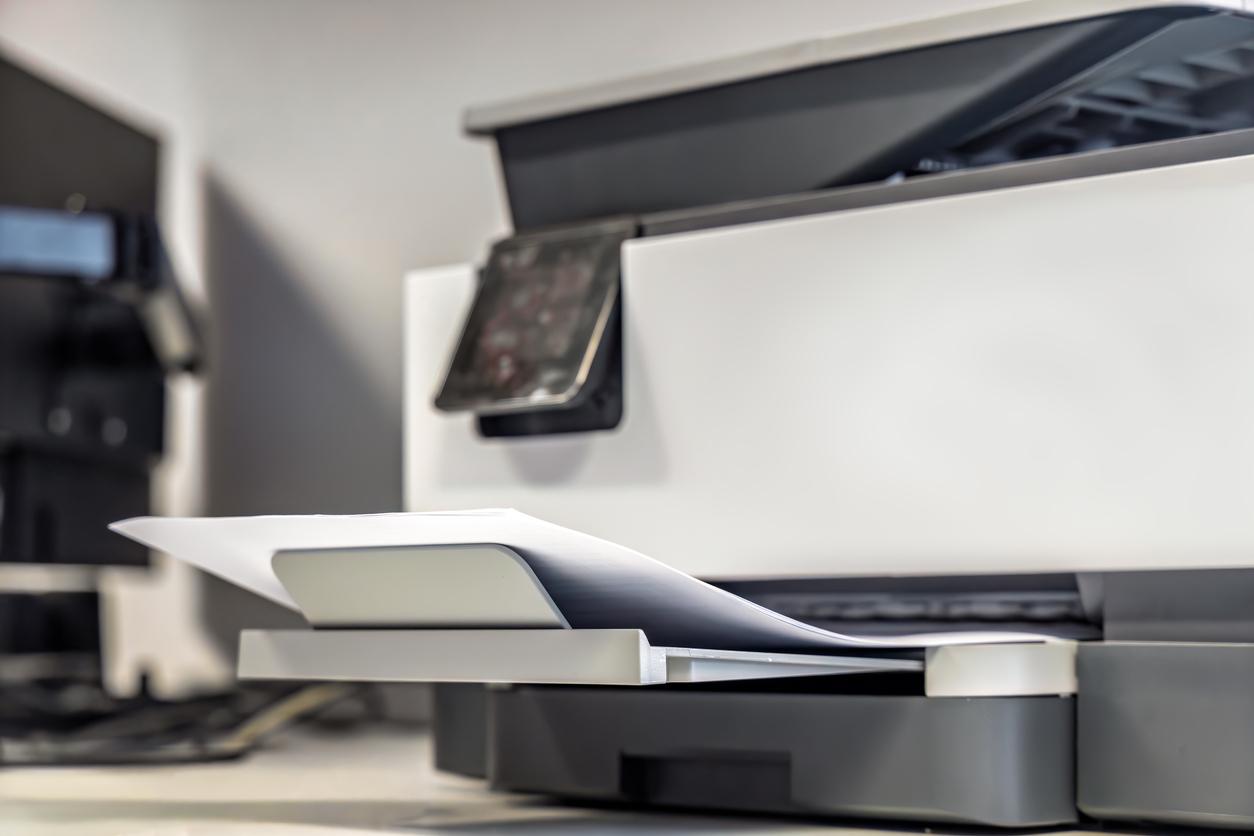
Example: An employee sends a payroll report to print, then gets pulled into a call before making it to the printer. For the next fifteen minutes, that report sits in the output tray of a shared device, readable by anyone who walks past.
Secure Print and Compliance: What Regulated Industries Should Know
For businesses in healthcare, education, financial services, and legal, an unattended printout isn’t only a security concern, it can be a genuine compliance issue.
Under HIPAA, an unattended printout containing protected health information (PHI) can be considered an accidental disclosure, which counts as a violation. This is a well-documented risk area for healthcare organizations, since printers are often overlooked in cybersecurity planning even though they handle patient data just as directly as a computer does.
Example: A medical office prints a patient’s chart, and it sits in the output tray of a shared printer in a hallway while staff attend to other patients. Under HIPAA, that counts as an accidental disclosure of PHI, the same category of violation as sending patient information to the wrong recipient.
FERPA carries a similar risk for schools and universities, which regularly print records containing student names, grades, and other protected information.
Example: A school office prints a class roster that includes student ID numbers and leaves it on the counter while attending to a parent at the front desk. This is a documented type of FERPA violation, and secure print release is one of the standard safeguards recommended to prevent it.
In both cases, the fix is the same: documents don’t print until the authorized person is physically present to release them, which removes the window of exposure entirely.
Beyond Compliance: Cost and Efficiency Benefits
Secure Print isn’t only a risk-reduction tool. Businesses that implement it often see a drop in wasted printing, since documents that are forgotten, duplicated, or sent by mistake never actually get released. Print management software layered on top gives IT and office managers a clearer picture of departmental print costs, which is difficult to track when jobs print automatically the moment they’re sent.
Getting Started
Secure Print works alongside tools like uniFLOW, PaperCut, and MyQ, and can typically be layered onto your existing print environment rather than requiring a full equipment overhaul. For businesses in regulated industries especially, it’s one of the more straightforward changes that closes a real, well-documented gap.
Not sure what’s sitting on your output trays right now? Contact ABS and we’ll help you figure out where the exposure is and what a secure print setup would look like for your business.